Autumn Hazards in Essex: How to Keep Your Dog Safe This September
September changes the walk before you notice it. Oak and horse chestnut trees start dropping acorns and conkers across Essex parks, verges and hedgerows, and both are a real risk if your dog eats them. At the same time, farmers move back onto the land now the bird nesting season has closed, so hedge cutting resumes and harvest traffic is still working its way along the lanes many walkers use. None of this means cancelling the walk. It means knowing what has changed and adjusting where and how you let your dog roam this month.
Why Acorns and Conkers Are a Real Risk This Month
Acorns contain tannins that irritate a dog's gut and, in quantity, can cause vomiting, diarrhoea and in serious cases kidney damage. Conkers carry a similar toxin called aesculin, and their size makes them a choking hazard and a cause of blockage on top of the poisoning risk. Both start falling from late August and litter the ground through September and October under any mature oak or horse chestnut, which covers a large share of Essex's parks, verges and farm boundaries.
Dogs rarely eat these deliberately. Most cases happen when a dog is sniffing through leaf litter or chasing a scent, and the acorn or conker gets swallowed along with whatever else is in its mouth. Signs of trouble, including vomiting, drooling, abdominal pain or swelling around the face, usually appear within a few hours and are worth an immediate call to your vet rather than a wait and see approach.
Farm Lanes Get Busier as Hedge Cutting Resumes
Under the Management of Hedgerows (England) Regulations 2024, cutting is banned from 1 March to 31 August to protect nesting birds. That ban lifts on 1 September, and farmers across Essex use the first weeks of the month to get hedges trimmed before autumn growth sets in properly. At the same time, later harvest work, including maize and sugar beet, keeps tractors and trailers moving on the same rural lanes and footpaths that dog walkers rely on.
For anyone walking public footpaths or bridleways through farmland, this means more machinery on narrow lanes with no pavement, reduced visibility where hedges are being cut, and gateways that may be busy with vehicle movements. None of this is a reason to avoid the countryside. It is a reason to keep dogs on the lead near working farmland this month and to give machinery a wide, unhurried berth.
What to Actually Do on September Walks
Check what is growing overhead before you let your dog off the lead. A patch of grass under an oak or horse chestnut is not the place for a free run this month, however tempting the open space looks. Keep your dog on the lead past farm gateways, along lanes without a verge, and anywhere you can hear or see machinery working.
Autumn rain also brings a flush of fungi across grassland and woodland edges, and several common species are harmful if eaten. Treat any mushroom your dog shows an interest in as one to move away from rather than one to identify. If your dog eats something on a walk and starts vomiting, seems unusually quiet, or shows facial swelling, treat it as urgent and get to a vet rather than waiting to see if it settles.
How Foxes Farm Fields Can Help
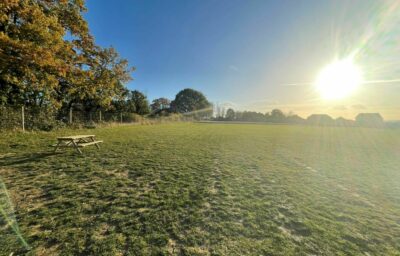
Every one of our private fields across Essex is fully enclosed, regularly mown and kept clear of the oak and horse chestnut cover that makes public parks a September hazard. There is no farm machinery moving through, no shared gateway to negotiate, and no other dog's find lying in the grass to worry about. Your dog gets a proper run without you having to watch every mouthful.
If you would rather swap an uncertain autumn walk for a controlled space this month, book one of our fields. Call us on 01206 481984 or get in touch through our Contact page to find your nearest location.
A safer autumn walk
Avoid fallen conkers, fungi and busy paths with a private session at our Great Bromley fields, or find a field near Harlow or Witham. As the season turns, read our calm guide to bonfire night, and look back at our tips on wasp season.