Wasp Season in Essex: How to Keep Your Dog Safe This August
August is peak wasp season across Essex. Colonies that have spent the summer growing are now at their largest, and as their usual food source dries up, wasps turn hungrier, bolder, and considerably more likely to sting. This matters to dog owners right now because our dogs explore the world nose-first, sniffing hedgerows, snapping at anything that moves, and investigating fallen fruit under garden trees. A late-summer walk that would have been perfectly safe in June can carry real risk in mid-August.
Why Wasps Turn Aggressive in Late Summer
A wasp nest reaches its peak population in August, sometimes housing several thousand workers. Earlier in the year, those workers are kept busy feeding larvae, and in return receive a sugary secretion that satisfies their own energy needs. By August, the queen has slowed or stopped laying, so far fewer larvae are being fed, which means far less of that natural reward for the workers.
Hungry and without their usual food source, wasps turn to ripening fruit, bins, picnic leftovers, and anything sweet they can find outdoors. They become more persistent, more likely to swarm a food source, and considerably quicker to sting if they feel threatened or are swatted away. It's this shift in behaviour, not simply more wasps existing, that makes August the month vets see the sharpest rise in sting-related visits.
Where Dogs Are Most Likely to Encounter Them
Most wasp stings on dogs happen in entirely predictable places. Overgrown hedgerows and long grass along footpaths hide nests that are easily disturbed by a curious nose. Gardens and orchards with windfall apples, pears, or plums draw wasps in for the sugar, and a dog investigating the fallen fruit can easily get stung on the muzzle or tongue. Public bins and picnic areas in parks are magnets for foraging wasps, and log piles, compost heaps, and shed eaves are common nesting spots that owners rarely think to check.
Because dogs tend to sniff, lick, or snap at insects rather than avoid them, the majority of stings land on the nose, lips, mouth, or paws, which are exactly the areas where swelling is most concerning.## What to Do If Your Dog Is Stung
A single sting on the body is usually more startling than dangerous. Expect localised swelling, redness, and some discomfort, which can typically be managed with a cold compress and some quiet time to settle. Unlike bees, wasps don't leave a stinger behind, so there's nothing to remove.
Stings inside the mouth or throat are a different matter. Swelling in these areas can restrict breathing surprisingly quickly, so any sting near the mouth warrants an immediate call to your vet, even if your dog seems fine at first. The same applies if you notice signs of an allergic reaction, such as facial swelling, hives, drooling, vomiting, weakness, or collapse, all of which need urgent veterinary attention.
The best protection is prevention. Keep dogs on the lead near orchards, bins, and picnic areas during August, check long grass before letting your dog off-lead, and avoid known nesting spots such as log piles or compost heaps. A well-managed, regularly mown space with no food waste lying around removes most of the temptation for wasps in the first place.
How Foxes Farm Fields Can Help
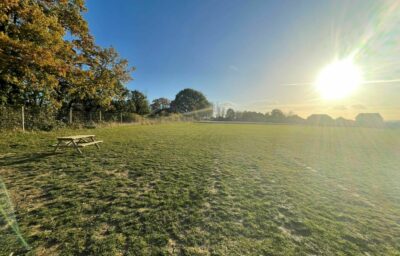
As a family business built by working Essex farmers, we know a thing or two about managing land responsibly, from hedgerow maintenance to keeping grazing and amenity areas free of the debris that attracts pests. That same attention carries over into every one of our 12 private dog fields: grass is kept short and tidy, there's no public bin or picnic-table food waste to draw wasps in, and each field is fully enclosed, so you're never sharing your session, or your dog's nose, with anyone else's mess.
If you'd rather swap an unpredictable hedgerow walk for a controlled, private space this August, we're here to help. Call us on 01206 481984 or get in touch via our Contact page to find your nearest field and book a session.